Stop use for electric shock, smoke, burning smells, a wet plug, exposed wiring, major leakage or repeated breaker tripping. Close the water supply. Disconnect power only if the plug and surroundings are dry and safe; otherwise keep clear and arrange qualified help.
These checks cover loading, settings and visible external connections. They do not involve removing covers, touching internal wiring, testing capacitors or bypassing safety interlocks. Read the exact model manual before any user-maintenance action.
External checks by symptom
Washing machine not starting
With dry hands and no water near the electrical area, check the household supply and that the door or lid closes without trapped laundry. Review child-lock and delay-start settings in the model manual. Do not dismantle the socket or appliance.
Stop and arrange help when
Stop use if there is a burning smell, damaged plug, repeated tripping or water near electrical fittings.
Washing machine not taking water
Check that water is available at the supply and the tap is open. Look for an externally kinked inlet hose without pulling the machine across its connections. Follow the manual for any user-serviceable inlet screen.
Stop and arrange help when
Close the water tap and stop the machine if it fills continuously or leaks.
Washing machine not draining
Inspect the visible drain hose for crushing and confirm the household drain is not backing up. Do not open a pump cover while water is hot or uncontrolled. Use only the manual's isolated, cooled drain procedure if you can do so safely.
Stop and arrange help when
Stop use if water is leaking toward electrical parts or if the pump hums continuously without draining.
Washing machine not spinning
Wait for the machine to stop and release normally. If the manual permits, redistribute or reduce the load. Check whether water remains inside. Never reach into a moving basket or bypass a switch.
Stop and arrange help when
Stop the cycle if the appliance moves violently, makes grinding noises or smells overheated.
Washing machine leaking water
Stop the machine and close its water tap. From a dry, safe position, observe whether water is at a visible hose joint or household drain. Do not touch a wet plug or stand in water to reach a switch.
Stop and arrange help when
Do not continue operating a leaking machine, especially when water is near electrical fittings.
Washing machine shaking during spin
Stop the cycle and wait for all motion to end. Redistribute an uneven load if permitted. Check whether the cabinet has obvious external contact with a wall or hose. Do not hold down a moving machine.
Stop and arrange help when
Stop using the appliance if it walks, strikes adjacent fittings or produces severe mechanical noise.
Washing machine making unusual noise
When the machine is stopped and isolated, check accessible pockets or visible loose items inside the drum without removing panels. Note whether the sound begins during filling, washing, draining or spinning.
Stop and arrange help when
Stop use for grinding, metal-on-metal rubbing, heavy knocking or a drum that appears misaligned.
Washing machine not cleaning clothes properly
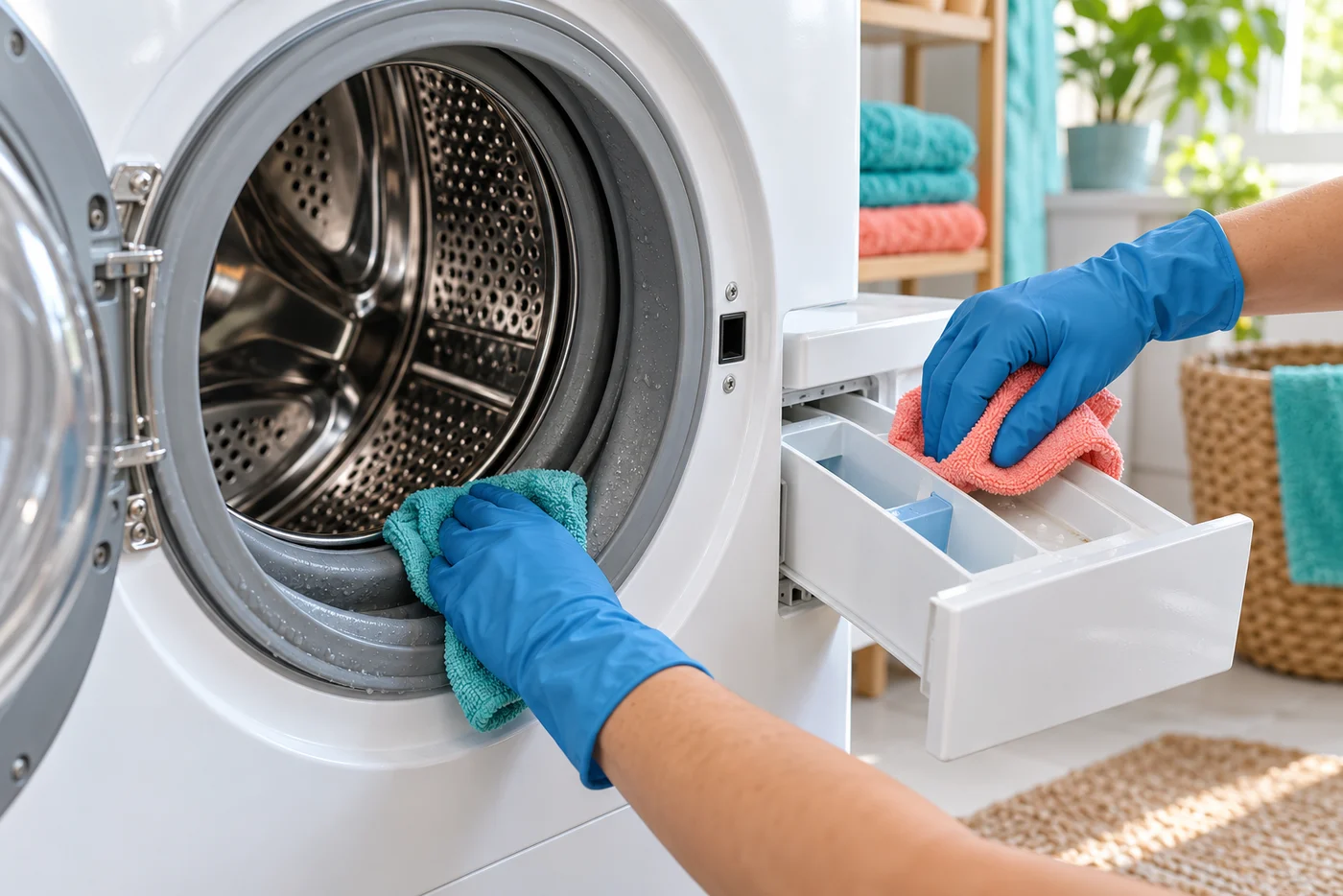
Review the garment labels and machine programme guide. Reduce an overloaded batch and measure detergent for the actual load and product instructions. Check the accessible drawer for residue.
Stop and arrange help when
Stop use if poor washing accompanies leakage, electrical tripping or abnormal heating.
Washing machine door will not open
Allow the programme to end and the normal release time to pass. Check the manual for the model's locked-door guidance. Do not pull hard on the handle or use tools to defeat the lock.
Stop and arrange help when
Do not attempt forced release while water is visible, the drum is moving or the contents may be hot.
Washing machine tripping the electrical supply
Stop using the washer and arrange professional assessment. If the area and plug are dry and safe, isolate the appliance. Do not defeat protective devices, use makeshift extensions or try another unprotected supply.
Stop and arrange help when
Keep the appliance out of use until the cause of repeated tripping has been identified and corrected.
Cleaning without damaging the machine
Use the detergent type, quantity and maintenance programme specified for the model.
Wipe accessible surfaces with a suitable soft cloth; do not spray controls or electrical parts.
Clean removable drawers or lint filters only as described by the manufacturer.
Allow hot water to cool and follow the manual before any user-accessible drainage or filter work.
Do not mix cleaning chemicals or assume that acid, bleach or household remedies are approved.
Do not force a locked door or reach into a moving basket.