
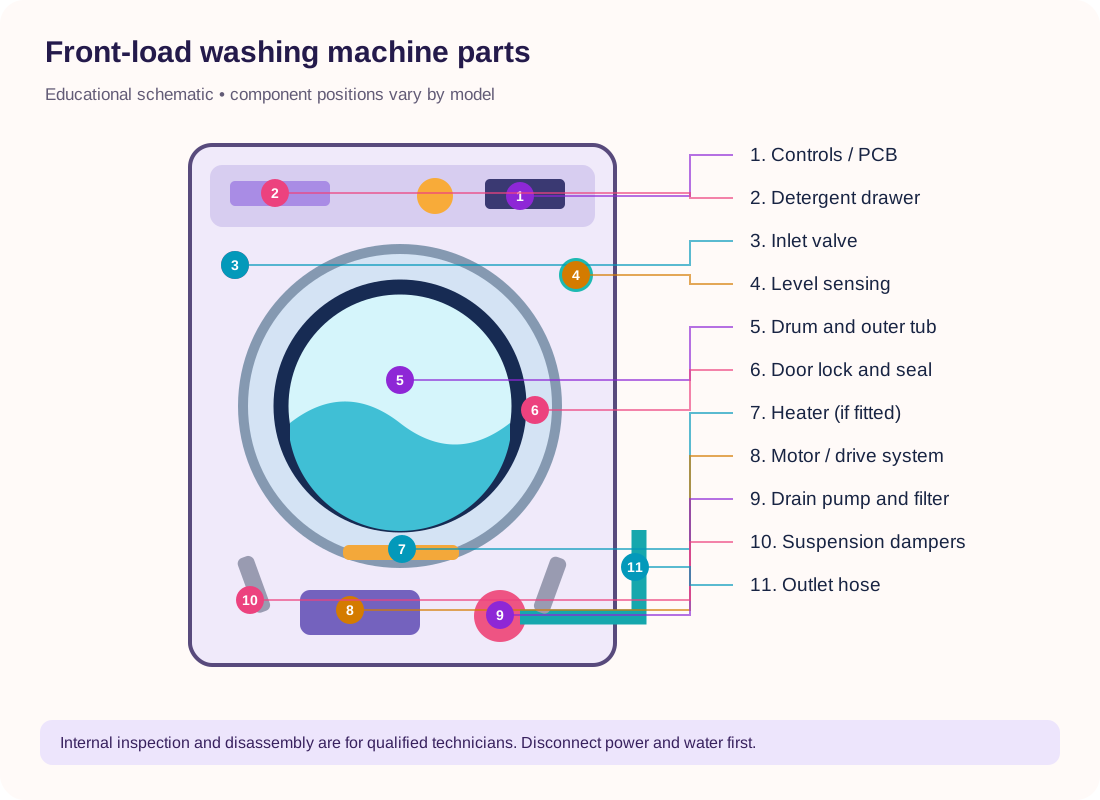
Controls and PCB
Receives programme selections and coordinates the cycle. A blank display can also result from the external supply, lock circuit or connected load; board replacement should follow testing.
Labeled front load washing machine parts, functions, related symptoms and repair limitations. Educational schematic; actual construction depends on the model.
Receives programme selections and coordinates the cycle. A blank display can also result from the external supply, lock circuit or connected load; board replacement should follow testing.
Routes incoming water through detergent compartments. Residue, wrong detergent or excess foam can affect dispensing without indicating a failed electronic component.
Controls entry of water. The supply tap, hose, strainer and available flow need checking before the valve is condemned.
Uses a sensing arrangement to monitor water level. A hose restriction or connection fault can imitate a sensor problem; the actual arrangement varies.
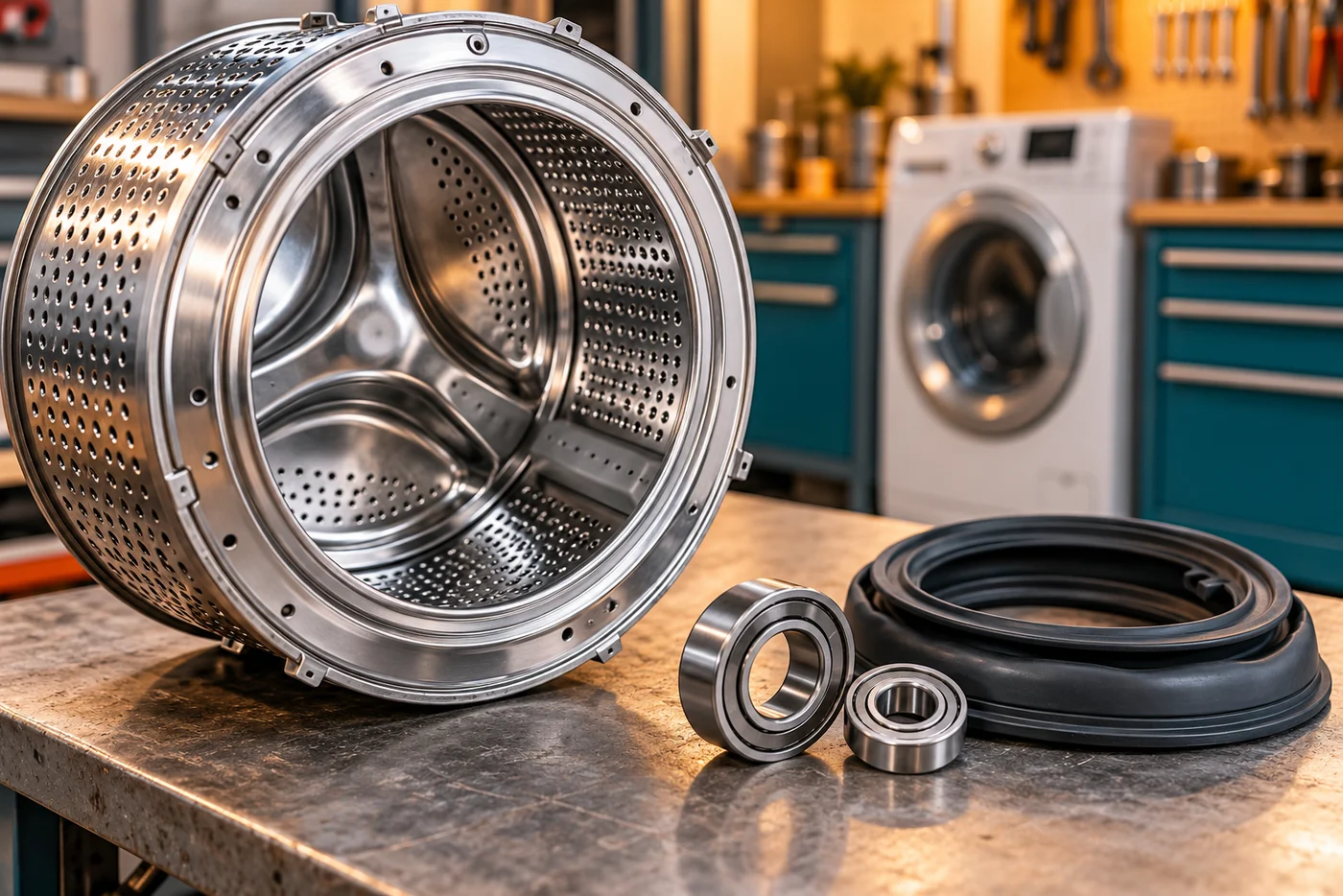
The perforated inner drum carries clothes; the surrounding outer tub contains water. Bearings, seals and tub construction affect the scope of drum repair.
The lock prevents unsafe access during operation; the rubber gasket seals the door opening. A tear, trapped article or overfoaming can cause leakage.
Warms wash water under sensor control. Electrical insulation and temperature-sensing checks belong to a qualified technician; not every model has identical heating hardware.
Turns the drum. Some machines use a belt and pulley while others use direct-drive arrangements. The illustrated position is schematic and does not identify your model.
Removes water through the outlet system. Debris, a blocked hose and pump failure can produce similar symptoms. Hot residual water needs safe handling.
Control tub movement with the spring system. Load distribution, leveling, transport bolts and flooring are checked before worn dampers are assumed.
Carries discharge water to the approved drain point. Installation height and routing follow the model instructions; incorrect routing can cause draining or siphoning problems.
During a typical cycle, the machine locks the door, admits a measured amount of water, combines it with detergent and tumbles the load. Models with a heater control temperature according to the selected programme. The water is drained before rinsing and the final spin. Sensors and controls monitor conditions such as water level, temperature and drum movement. A safety condition can prevent spinning or keep the door locked. The sequence, water levels and control method differ between models; an error message is a starting point for diagnosis rather than proof that a named component must be replaced.
Water entry, level sensing, wash motion, draining and spinning depend on several systems working together. A blocked drain may prevent spinning even when the motor is healthy. A door-lock fault can stop the programme before water enters. This is why a symptom should be traced through the actual operating sequence rather than linked to a single part name.
Tub construction determines whether bearings can be serviced separately. Some models use sealed assemblies. Not every machine has the same heater, drive or sensor arrangement, and replacement parts must match the model. Heavy drum work may require more time or workshop assessment. Manufacturer warranty enquiries should go to the company before independent dismantling.
Call 9413778916 to discuss the fault, machine type, model and location. Confirm the visiting charge, availability and proposed work before booking.
Call 9413778916 ↗