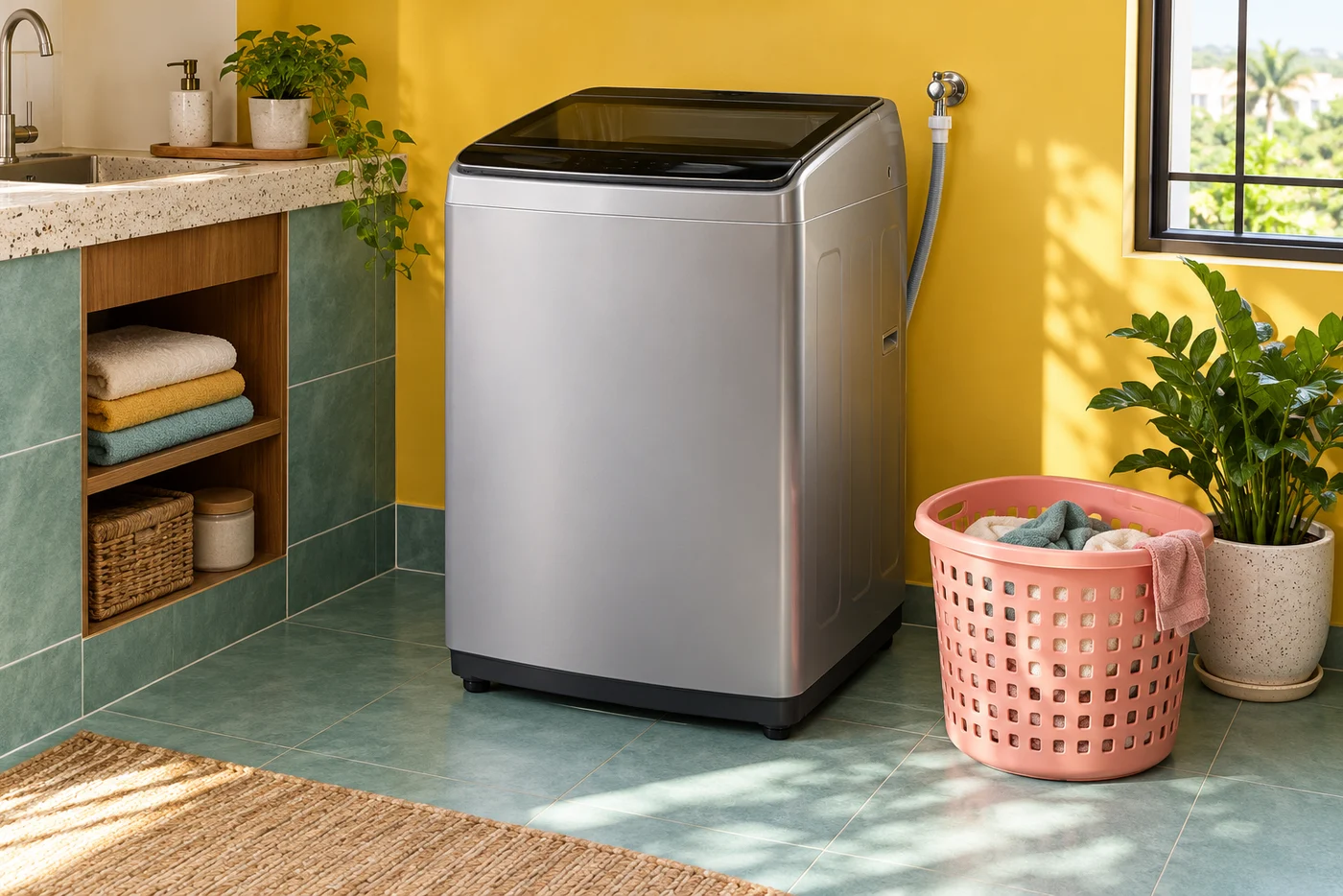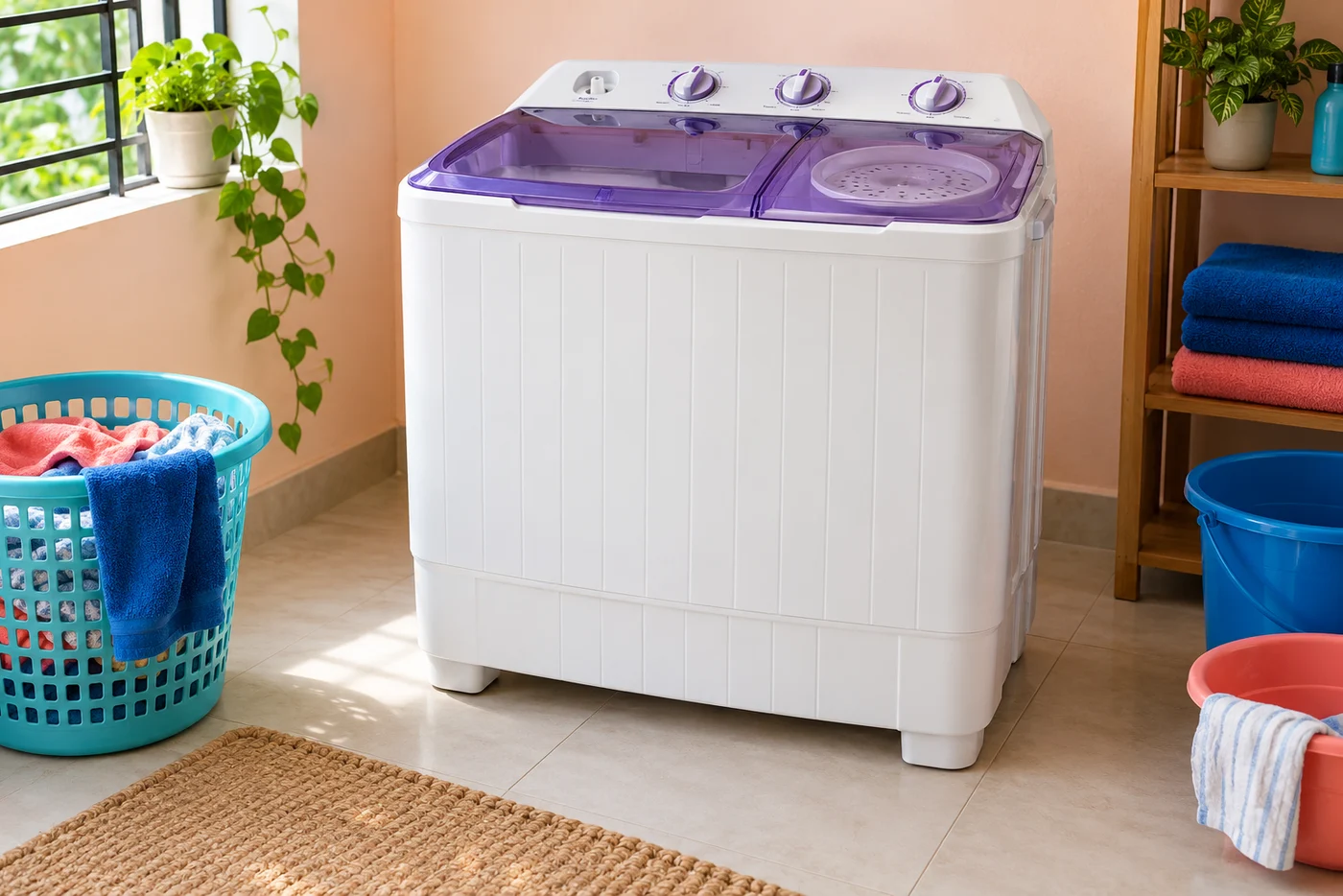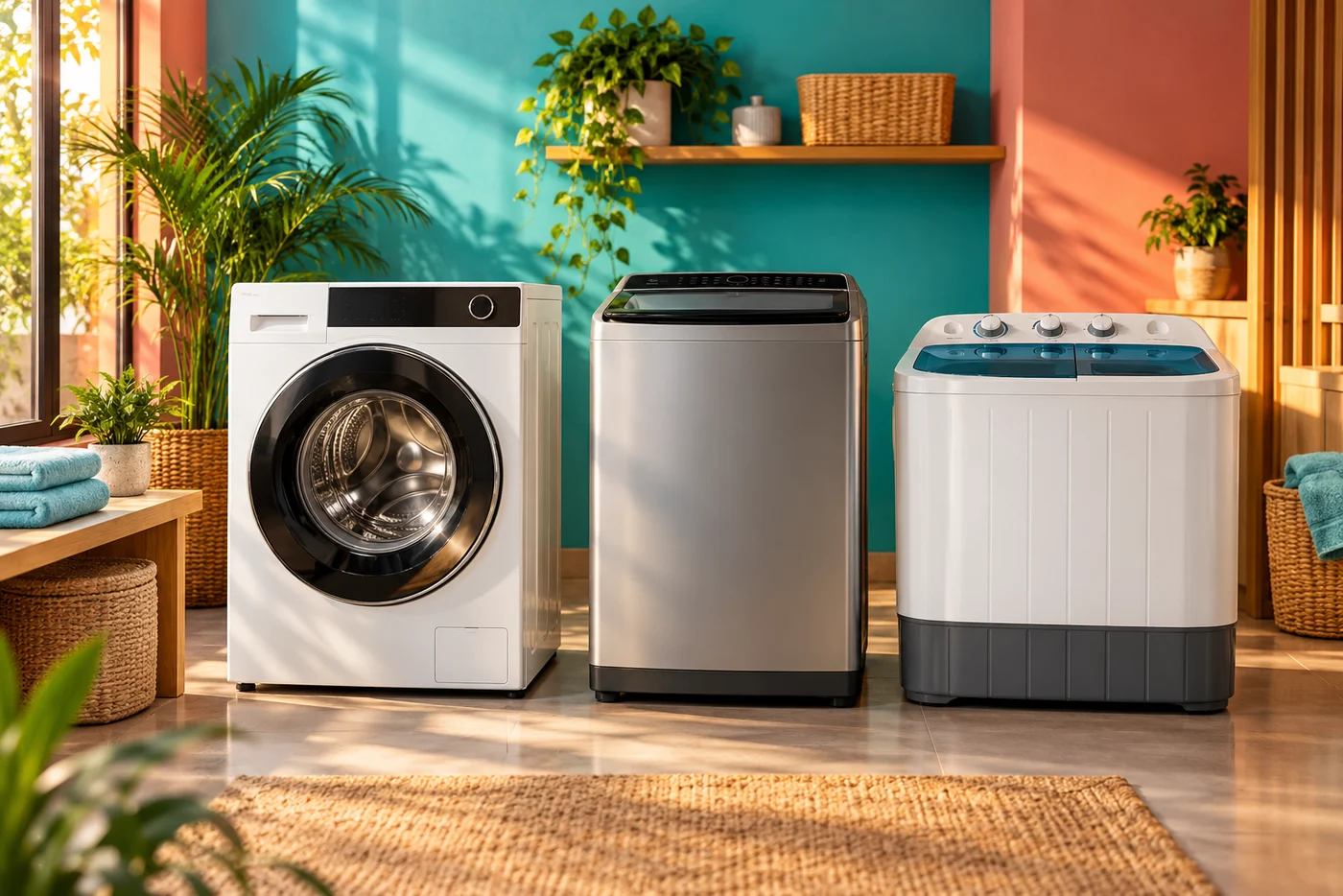
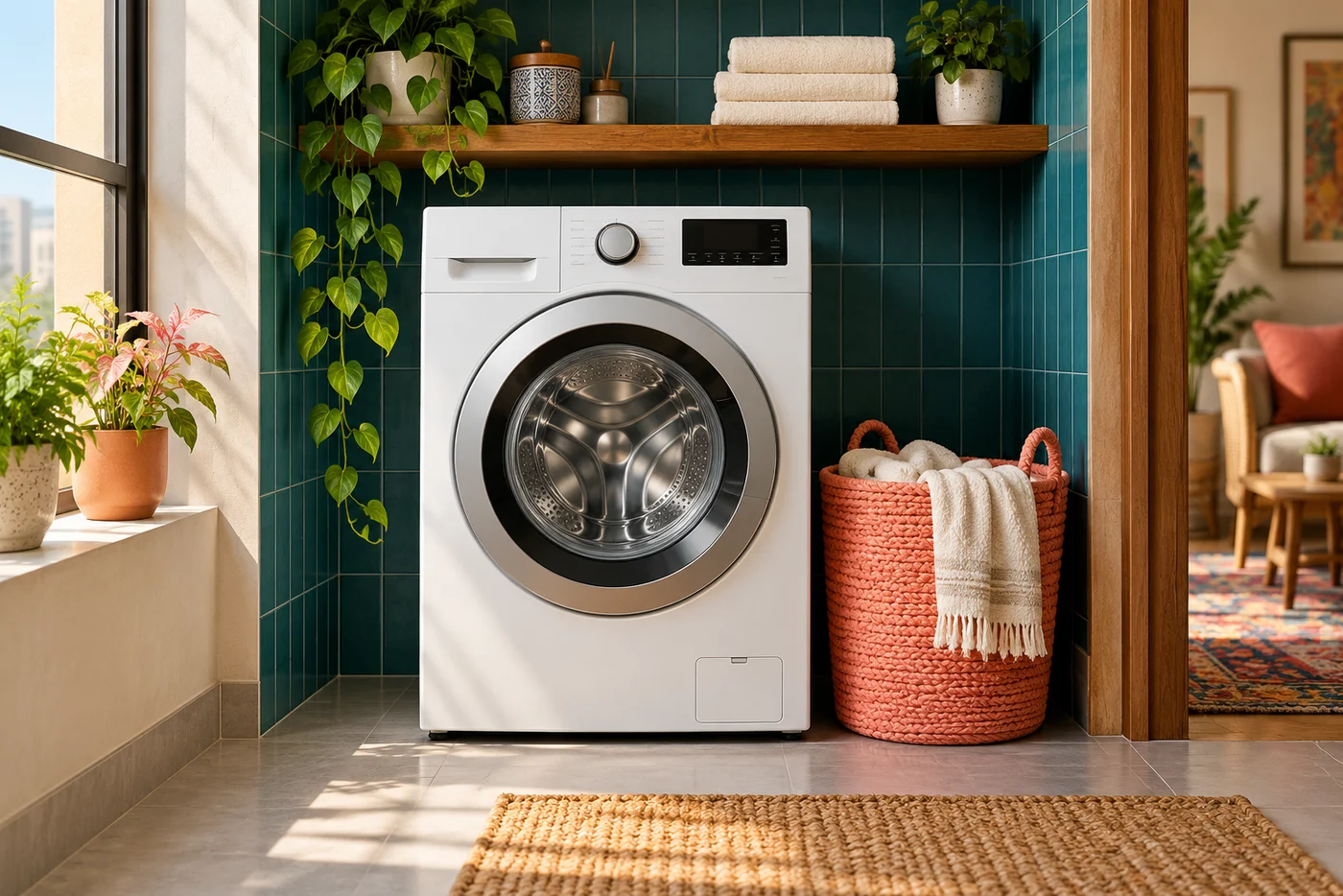
| How washing works | Horizontal drum tumbles the load | Vertical basket with pulsator or agitator | Separate wash tub and spin basket |
| User involvement | Automatic cycle after loading and settings | Automatic cycle after loading and settings | Fill, drain and transfer steps depend on the design |
| Space and access | Front door needs clearance; stacking only with an approved arrangement | Top lid needs overhead clearance | Usually wider; access needed to both lids |
| Water handling | Designed for controlled automatic filling | Automatic filling; cycle and water use vary | Water management is often more manual |
| Routine cleaning | Door gasket, drawer and model-approved drum cycle | Tub rim, dispenser and user-serviceable lint areas | Wash tub, lint screen, spin basket and accessible surfaces |
| Frequent repair areas | Lock, pump, seal, bearings, heater, sensors, PCB | Lid system, suspension, inlet, drive, drainage, PCB | Timers, motors, belts, selector, spin brake and lid switch |
| Repair feasibility | Sealed tub and model-specific electronics can affect scope | Transmission and suspension design change the repair | Separate mechanisms can be assessed individually; parts still model-specific |
| Choosing a machine | Consider access, fabric care, programmes and total ownership cost | Consider loading height, lid clearance, capacity and convenience | Consider manual handling, wash routine, space and budget |